Introduction
As electric vehicles (EVs) and grid-scale energy storage solutions (ESS) become mainstream, the performance and safety of lithium-ion batteries draw more attention. At the center of every pack is the Battery Management System (BMS), the brain and safety guardian of the entire system. Among its functions, state estimation (knowing the battery’s true condition in real time) is what ultimately ensures a safe, long-lived, high-performance system. For modern EV and energy-storage applications, accurate BMS state estimation is one of the key drivers of innovation.
A high-quality BMS performs several essential functions:
- Safety protection (over-charge, over-discharge, over-current, temperature extremes)
- Cell balancing to ensure uniform aging and maximize pack capacity
- Thermal management decision-making
- Charge and discharge control
- Degradation tracking and lifetime prediction
- Power and energy prediction for drivetrain or grid control systems
All these functions require accurate state estimation, without which no downstream control algorithm can perform reliably.
State estimation: the core intelligence of modern BMS
The BMS must estimate four tightly coupled internal states:
- State of Charge (SOC)
- State of Health (SOH)
- State of Energy (SOE)
- State of Power (SOP)
These variables define range, performance, safety limits, and remaining useful life.
State of charge (SOC)
SOC represents the fraction of usable charge remaining in the battery relative to its total capacity. However, unlike physical quantities such as voltage or current, lithium-ion SOC cannot be measured directly. It must be estimated using a combination of:
Model-based methods:
- Coulomb counting
- Open-circuit voltage (OCV)–SOC mapping
- Equivalent Circuit Models (ECM)
- Extended or Unscented Kalman Filters (EKF/UKF)
- Sliding-mode or Luenberger observers
Data-driven / machine learning (ML) approaches:
- Neural networks
- Hybrid physics-informed neural networks
- Recursive learning models trained on real-world cycling data
In both EV and grid applications, SOC errors as small as 3–5% can cause:
- Unexpected shutdowns
- Loss of usable capacity
- Inaccurate range prediction, and
- inefficient or unsafe charging behavior
With fast charging, low-temperature operation, and Ni-rich chemistries (such as nickel manganese cobalt (NMC) 811), SOC estimation becomes even more challenging due to hysteresis, voltage plateaus, and transient kinetics. This is why advanced algorithms, such as EKF with adaptive parameter identification, are rapidly becoming standard.
(GHB Intellect also conducts advanced characterization of highly Ni-enriched cathodes as well as lithium iron phosphate (LFP) batteries. Our analyses in the past have revealed several novel cathode chemistries introduced by original equipment manufacturers (OEMs) for both EV and energy-storage applications.)
State of health (SOH)
SOH estimation allows the BMS to quantify remaining useful life (RUL) and to track underlying degradation mechanisms, including:
- Loss of lithium inventory (LLI)
- Loss of active material (LAM)
- Increase in impedance (solid electrolyte interphase (SEI) growth, particle cracking, surface reconstruction)
- Transition-metal dissolution and surface reconstruction
Model-based impedance tracking (such as open-circuit voltage trends, ohmic resistance evolution, or charge-transfer resistance changes), machine-learning analysis of long-term cycling data, and physics-informed models all contribute to SOH prediction. In energy-storage systems, accurate SOH is essential for economic optimization, asset planning, and preventing catastrophic failures that could escalate into thermal runaway.
State of energy (SOE) & state of power (SOP)
State of Energy (SOE) and State of Power (SOP) determine how much usable energy remains in the battery and how much power it can safely deliver or absorb at any given moment. These quantities depend on several factors, including SOC, internal resistance and impedance characteristics, temperature, and the battery’s degradation state.
Accurate SOE and SOP estimation is critical for both EV and grid applications. Fast-charging strategies such as constant current/constant voltage charging, pulse charging, and adaptive multi-stage protocols rely heavily on precise SOP limits to prevent overstress. Similarly, grid services, including frequency regulation, peak shaving, and black-start support, depend on reliable SOE/SOP prediction to meet operational and contractual requirements.
Even small errors in SOP estimation can lead to torque limitations, power derating, inverter trips, grid-penalty violations, or accelerated degradation caused by operating the battery beyond safe electrochemical limits.
Modern battery chemistries and application demands are pushing traditional BMS estimation strategies to their limits. For example, high-nickel cathodes, such as NMC 811, which are currently used in EVs, show more hysteresis and a faster rise in impedance as they age.
Silicon-containing anodes add further complexity due to nonlinear swelling, pronounced hysteresis at high rates, and an elevated risk of lithium plating.
Fast charging at rates above 3C produces highly distorted voltage and current profiles that degrade the accuracy of OCV-based estimators.
Tracking SOC and SOH in lithium-iron-phosphate (LFP) batteries is uniquely challenging due to the extremely flat OCV curve and the minimal change in ohmic resistance across the SOC range, which significantly reduces the observability of internal states.
Together, these challenges make traditional approaches (static OCV look-up tables, simple Coulomb counting, and fixed-parameter ECMs) inadequate for accurate and reliable state estimation. As a result, the industry is moving toward more advanced methods, including:
- Physics-informed neural networks
- Hybrid EKF–neural network estimation models
- Adaptive parameter identification within ECM frameworks
- High-fidelity thermal–electrochemical coupled models
Identification and analysis of these emerging methods are key areas of interest for GHB Intellect, particularly within our battery-system reverse-engineering activities.
Emerging landscape in advanced BMS state estimation
As battery systems grow more complex and demanding, the industry is rapidly shifting away from static OCV-based estimation toward dynamic, adaptive, physics-aware approaches. Several major technological trends are defining this new landscape.
Kalman-filter-based and adaptive estimation
Modern automotive microcontrollers (NXP, Renesas, TI C2000, Infineon AURIX) now support real-time observers that were previously too computationally intensive for embedded BMS. This has enabled widespread adoption of advanced Kalman-filter architectures.
Extended kalman filter (EKF)
EKF handles nonlinear ECM dynamics through a combination of:
- model-based voltage prediction
- Coulomb counting
- Dynamic parameter correction, and
- Adaptive noise modeling
This reduces SOC drift and improves performance under fast transients and real-world load profiles.
Unscented kalman filter (UKF)
UKF avoids explicit linearization, making it well suited for:
- Highly nonlinear chemistries (Ni-rich, Si-blends)
- Low-temperature operation, and
- Complex voltage hysteresis
It often surpasses EKF when system nonlinearity is severe.
Dual kalman filter (state + parameter estimation)
Dual filters update both:
- Internal states (SOC, SOE, SOP), and
- Model parameters (internal resistance, diffusion coefficients, OCV shifts, aging markers)
Because real batteries continuously evolve, this adaptive capability is crucial for tracking aging, temperature drift, usage patterns, and degradation mechanisms in real time.
As embedded processors and ML accelerators improve, these Kalman-based adaptive algorithms are becoming the baseline for modern EV and ESS BMS platforms.
Rise of electrochemical battery models
For more than a decade, Equivalent Circuit Models (ECMs) dominated BMS design due to their simplicity, speed, and ease of implementation. However, modern battery chemistries and use cases (NMC 811, nickel cobalt aluminum, lithium nickel manganese oxide, silicon-rich anodes) have pushed ECMs to their limits.
To address these challenges, industry is transitioning toward electrochemical models (EMs) that offer physics-grounded insight into internal battery processes.
Electrochemical models are gaining rapid momentum in modern BMS design because they capture the fundamental physics of how lithium-ion batteries behave internally, which conventional ECMs cannot fully represent. Single-Particle Models (SPM), enhanced SPM variants, and pseudo-2D (P2D) models describe key processes such as lithium concentration gradients, diffusion limitations, kinetic and ohmic overpotentials, lithium plating thresholds, temperature-coupled degradation mechanisms, phase transitions, surface reconstruction, and impedance rise linked to microstructural changes. These capabilities make electrochemical models far more accurate for predicting SOC, SOH, and SOP, especially under fast charging, deep cycling, and extreme temperature operation.
Compared to ECMs, electrochemical models offer several critical advantages. They deliver higher accuracy at both low and high SOC because they reflect real physical behavior rather than voltage-fitting approximations. Their ability to model diffusion limits, overpotentials, and plating onset enables more intelligent and safer fast-charging strategies. EMs also provide superior SOH estimation by directly modeling degradation pathways, including loss of lithium inventory (LLI), loss of active material (LAM), SEI growth, increases in charge-transfer resistance (R_ct), and losses in electronic conductivity. In terms of safety, electrochemical models can predict conditions that lead to plating, gas evolution, thermal runaway onset, and other side reactions long before voltage-based estimators detect abnormalities. Furthermore, their physics-based nature makes them inherently compatible with digital twin frameworks, where cloud models synchronize with embedded EM-based estimators for continuous fleet-wide optimization.
Historically, the main barrier to adopting electrochemical models in production BMS systems was computational cost. Full P2D models were too heavy for embedded processors. However, recent advances have removed these limitations. Reduced-order P2D formulations, physics-informed neural networks (PINNs), real-time parameter adaptation techniques, and hardware acceleration through field-programmable gate arrays, application-specific integrated circuits (ASICs), graphics processing units, and edge tensor processing units have dramatically improved computational feasibility. Efficient look-up-table-based solvers and semi-analytical methods have further enabled high-speed implementation. As a result, SPM and reduced P2D models are now running in advanced prototypes and pre-production BMS platforms, marking a major step toward mainstream adoption of electrochemical intelligence.
Electrochemical impedance spectroscopy (EIS): a new dimension of intelligence
As demands on battery performance continue to increase, the industry is turning to impedance-based modeling to access internal states that traditional time-domain voltage and current measurements cannot reveal. Electrochemical Impedance Spectroscopy (EIS) provides a frequency-resolved fingerprint of a battery’s condition, enabling decomposition of key phenomena such as ohmic resistance (R₀), SEI film resistance (R_SEI), charge-transfer resistance (R_ct), double-layer capacitance (C_dl), solid-state diffusion behavior (Warburg impedance), low-frequency processes associated with plating, temperature-dependent kinetic effects, and early-stage aging or microstructural changes. Because EIS is highly sensitive to subtle internal variations, it can detect degradation long before OCV curves or capacity measurements show noticeable deviation.
Recent advancements in hardware and algorithms are now bringing EIS into real-time BMS applications. Technologies such as on-board impedance-sensing integrated circuits, low-amplitude broadband excitation, pseudo-random binary sequence-based frequency injection, machine-learning-based impedance reconstruction, and cloud-assisted estimation have made it feasible to perform impedance-informed diagnostics during normal operation. These capabilities enhance several core state-estimation tasks. For SOC estimation, specific frequency bands correlate with charge-transfer processes and electrochemical capacitance, improving accuracy under hysteresis and dynamic loads. For SOH estimation, spectral changes reveal SEI thickening, LLI, LAM, structural transitions in Ni-rich cathodes, and particle cracking. SOP prediction also benefits from EIS because power capability is directly influenced by resistance, diffusion limitations, interfacial kinetics, and temperature. Perhaps most critically, EIS can detect the onset of lithium plating by identifying characteristic low-frequency arc shifts, enabling safer and more aggressive fast-charging strategies.
Multiple modeling approaches leverage EIS data to enhance BMS accuracy. In EIS-enhanced ECMs, real-time updates of R₀, resistor-capacitor elements, and Warburg components are fed directly into EKF or UKF observers. Electrochemical models, such as SPM or reduced P2D, use EIS-derived diffusion coefficients, kinetic rate constants, and double-layer capacitance values to dramatically improve physical fidelity. Machine-learning-based EIS models further extend these capabilities by reconstructing impedance spectra from limited frequency points or even from time-domain charge/discharge behavior. Collectively, these methods have positioned EIS as a useful tool for next-generation, physics-aware BMS intelligence.
Hybrid modeling
As battery systems become more complex, it is increasingly clear that no single modeling approach is sufficient for reliable state estimation. Equivalent Circuit Models (ECMs) offer fast computation and simplicity but lack physical insight. Electrochemical models (EMs) provide high-fidelity physics but have historically been too computationally intensive for real-time use. Electrochemical Impedance Spectroscopy (EIS) delivers rich diagnostic information, yet its implementation in embedded systems can be challenging. Machine learning (ML) offers strong adaptability and pattern recognition but may lack interpretability without a physics foundation.
The emerging solution is hybrid modeling, which integrates the strengths of all four approaches. Electrochemical models supply the underlying physics, EIS contributes internal-state visibility, ECMs ensure real-time responsiveness, and ML techniques provide parameter adaptation, anomaly detection, and continuous learning. Combined, these methods enable highly accurate SOC, SOH, SOE, and SOP estimation across fast-charging events, low-temperature operation, high-power conditions, and deeply aged battery states. This hybrid framework is quickly becoming the new standard for next-generation EV and ESS BMS platforms.
When SOC, SOH, SOE, or SOP are estimated inaccurately, the consequences can be severe. Poor estimation increases the risk of thermal runaway, accelerates aging, and reduces fast-charging capability. It also leads to range uncertainty, torque limitations, and power derating in EVs, while in energy-storage systems it can trigger grid-contract penalties, unexpected shutdowns, and operational inefficiencies. In extreme cases, misestimation results in early battery-pack replacement, costing millions of dollars. Across both EV and ESS applications, these outcomes underscore a critical fact: the BMS, more than the underlying cell chemistry, is often the true limiting factor in system safety, performance, and lifetime.
A four-layer framework for BMS reverse engineering
Our teardown and reverse-engineering workflow integrates advanced engineering, laboratory analysis, and real-world validation to build a complete, well-supported understanding of how modern Battery Management Systems (BMS) are architected. Rather than focusing on isolated components, this framework reconstructs the physical, electrical, and algorithmic foundations that govern safety, performance, and competitive differentiation in EV and ESS platforms.
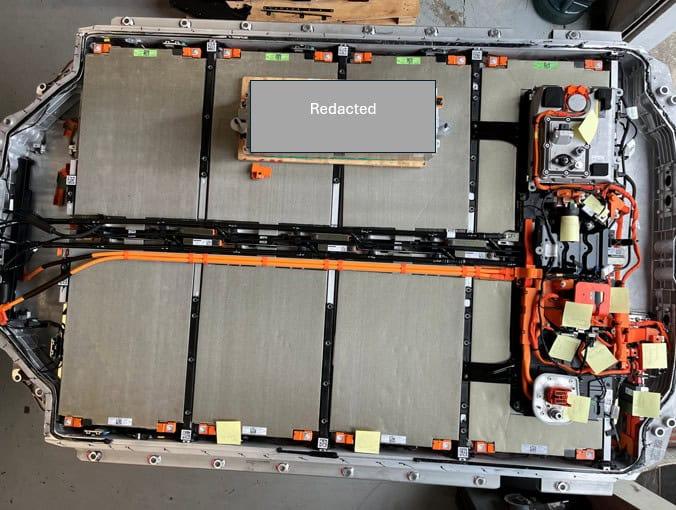
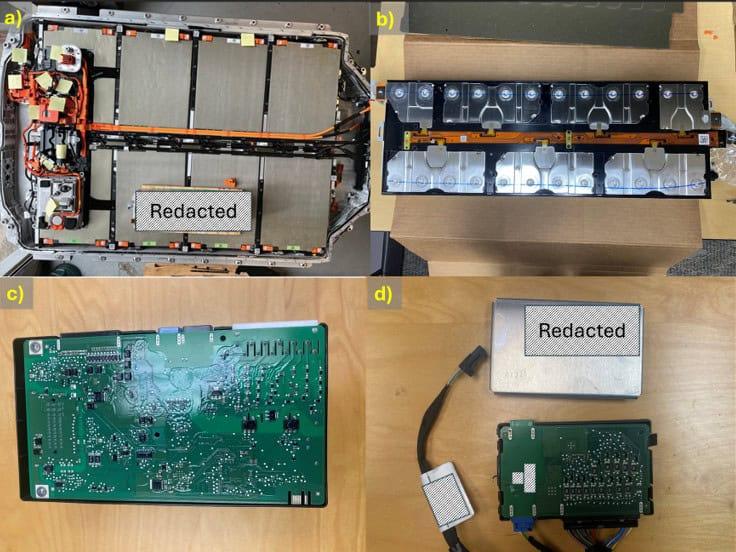
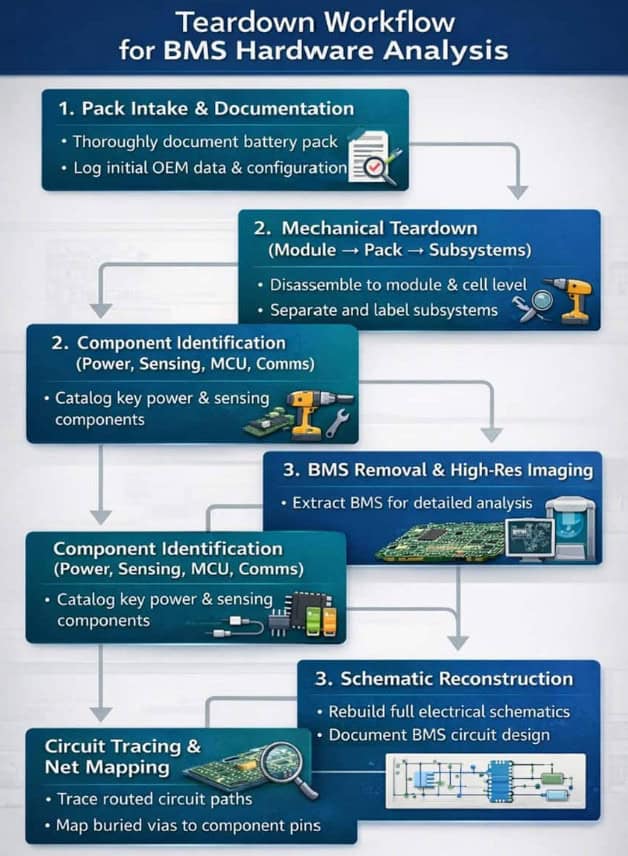
Physical teardown & component identification
The reverse-engineering process begins with systematic disassembly of the battery pack under controlled safety procedures. This includes high-voltage isolation, pack opening, and progressive mechanical teardown to the module, cell, and subsystem levels. BMS controllers are carefully extracted and subjected to high-resolution imaging and cataloging, enabling full identification of sensors, protection devices, isolation components, gate drivers, ASICs, and microcontrollers.
This phase reveals how the OEM has architected safety domains, sensing topologies, power distribution networks, and redundancy strategies that directly influence system robustness and regulatory compliance.
Circuit-level reverse engineering
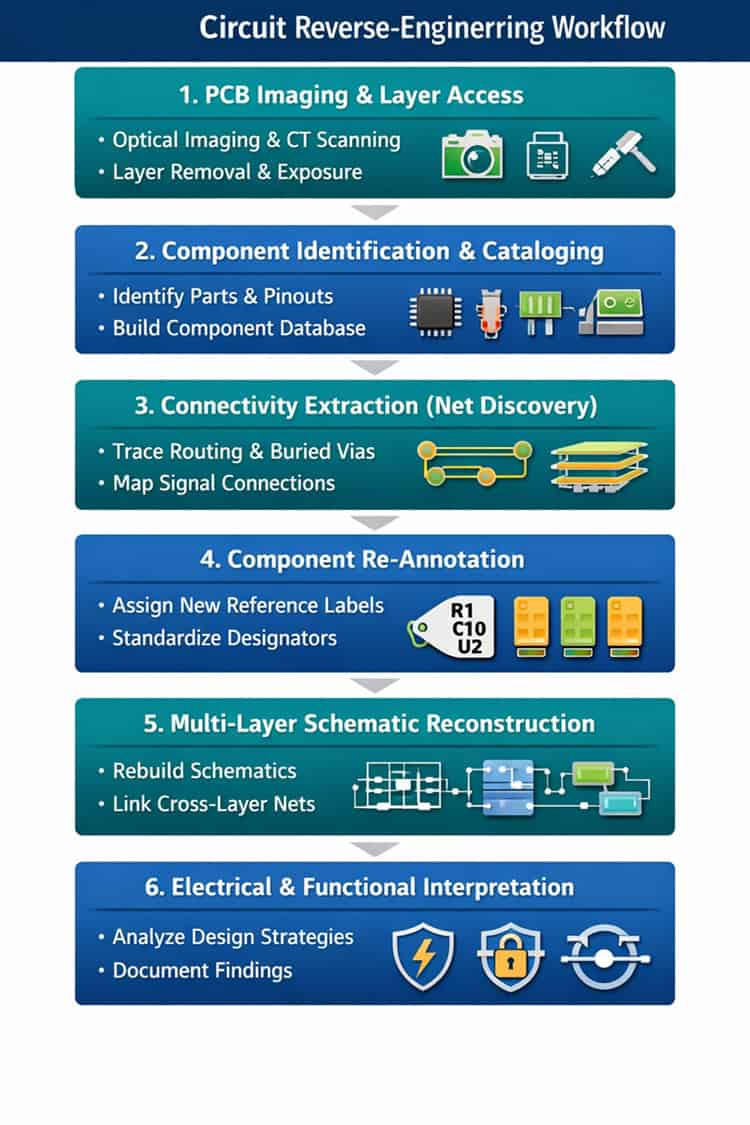
Once the hardware is exposed, our engineers reconstruct the full electrical architecture of the BMS. This includes the detailed analysis of protection and contactor drive circuits, sensing front-ends, balancing networks, isolation monitors, redundant safety channels, power-management subsystems, and vehicle-communication interfaces such as Controller Area Network and Local Interconnect Network.
By rebuilding complete schematics and identifying every functional circuit block and electrical connection, we uncover the OEM’s design philosophy, revealing how noise immunity, fault tolerance, measurement accuracy, balancing performance, and safety margins are intentionally engineered into the platform.
CT-scanning & PCB delayering
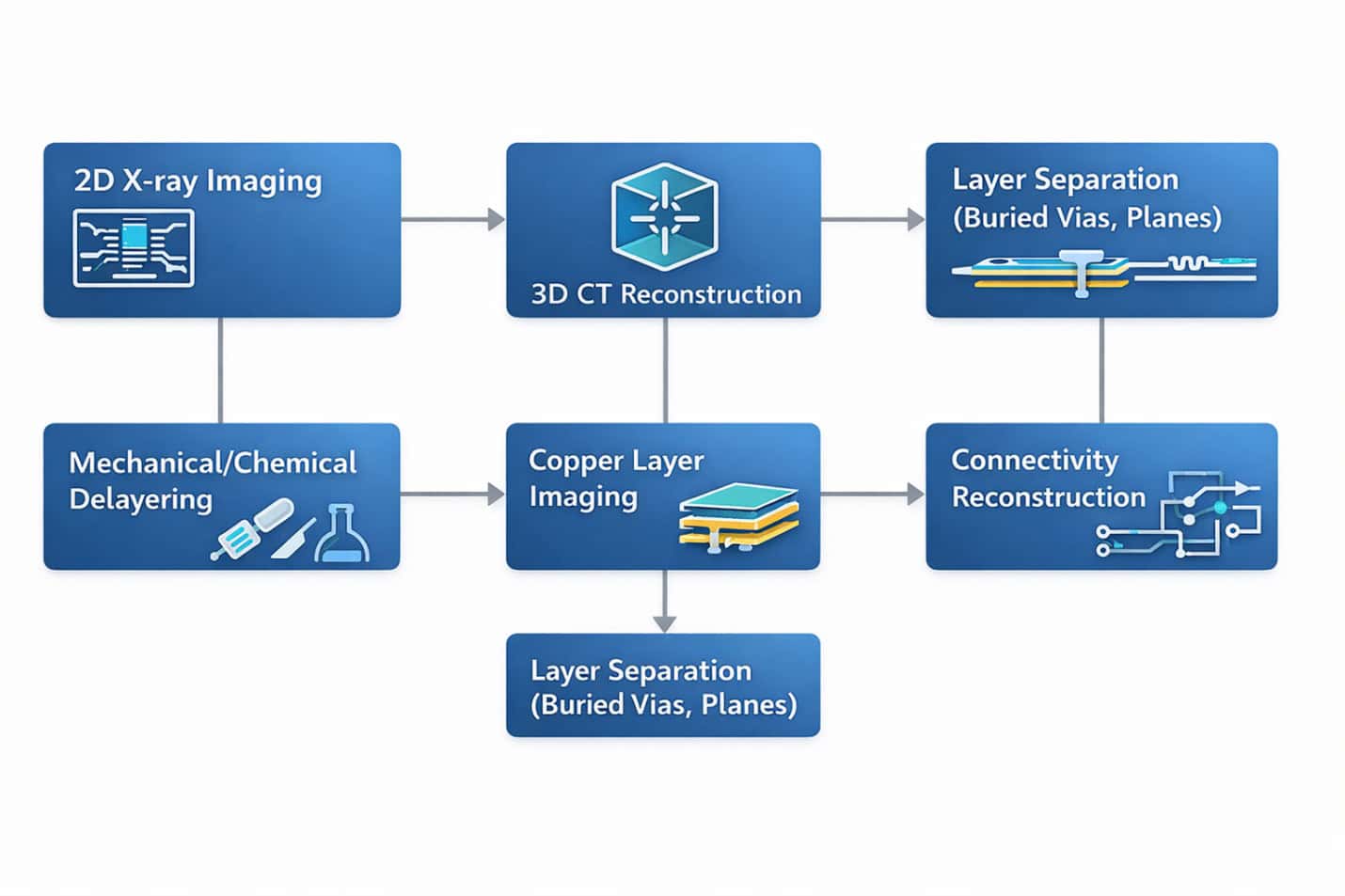
Modern BMS printed circuit boards (PCBs) typically feature high layer counts, buried vias, segmented ground domains, and dense analog and high-voltage routing. These internal structures are not visible from the surface and require advanced imaging and delayering techniques to reveal their full architecture.
To expose this hidden complexity, GHB Intellect applies 2D X-ray imaging, high-resolution 3D computed tomography scanning, and mechanical or chemical delayering.
These analyses enable reconstruction of every copper layer, interlayer via, and routing path, producing a complete visual and electrical representation of the PCB.

Firmware reverse engineering: exposing the algorithmic core
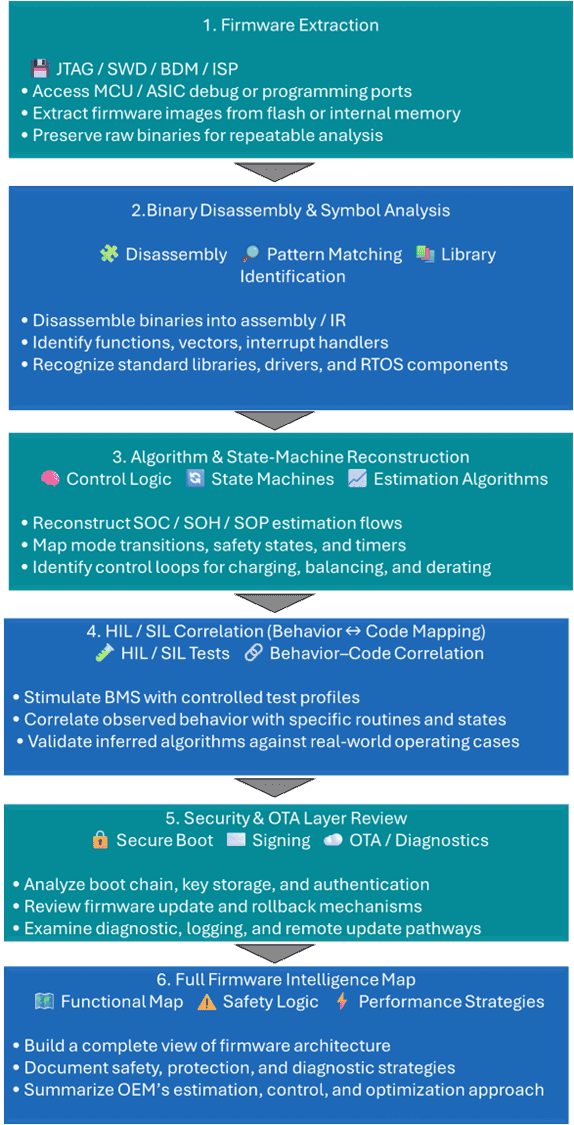
At the core of modern BMS functionality lies embedded firmware that governs system intelligence. This firmware implements estimation algorithms for State of Charge (SOC), State of Health (SOH), and State of Power (SOP), along with adaptive observers, fast-charging logic, thermal-management decisions, fault-detection routines, and secure-boot and over-the-air update mechanisms.
GHB Intellect performs firmware extraction using debug and diagnostic interfaces, followed by binary disassembly, symbol analysis, and state-machine reconstruction. These software-level findings are correlated with hardware-in-the-loop testing to validate algorithm behavior under real operating conditions. This process allows us to map the OEM’s full algorithmic strategy, from sensing and filtering to safety enforcement and performance optimization.
Why BMS reverse engineering matters more than ever
Modern Battery Management Systems determine charging performance, safety margins, lifetime behavior, and regulatory compliance, which makes them competitive differentiators. As EV and ESS platforms evolve rapidly, understanding how leading OEMs architect and implement their BMS has become critical for technology strategy, intellectual-property positioning, and risk management.
Competitive benchmarking
OEMs invest heavily in BMS design, yet datasheets and public disclosures reveal very little about how safety, performance, and lifetime optimization are actually achieved. Reverse engineering provides a direct window into how leading manufacturers balance protection thresholds, sensing accuracy, redundancy strategies, and algorithmic control. By reconstructing circuit architectures and firmware logic across multiple product generations, GHB Intellect enables organizations to identify design trends, benchmark competing platforms, and uncover technology gaps that inform research and development (R&D) roadmaps and long-term product strategy.
Patent protection & evidence-of-use
GHB Intellect routinely supports patent litigation, licensing, and portfolio development by translating complex hardware and firmware implementations into technical evidence that holds up in court. Our reverse-engineering workflows identify how claimed inventions are physically implemented at the circuit level, how patented estimation and control algorithms appear in firmware, and how system-level behaviors correspond to protected methods. In addition to validating existing patents, our work frequently reveals novel architectural or algorithmic approaches that may form the basis of new patent filings, which makes this analysis valuable for legal teams, licensors, and intellectual property (IP) strategists.
Safety and system assurance
Understanding how a BMS detects faults, manages contactor behavior, filters sensor noise, and transitions between operating states is essential for verifying functional safety and long-term system robustness. Reverse engineering allows organizations to independently assess compliance with standards such as ISO 26262, evaluate redundancy strategies, and examine how systems behave under abnormal and fault conditions. This level of insight supports both product qualification and regulatory risk mitigation.
Technology scouting & M&A due diligence
For investors, suppliers, and OEMs evaluating partnerships, licensing opportunities, or acquisitions, reverse engineering provides the clearest possible view into the maturity, scalability, and competitiveness of a company’s BMS technology. Rather than relying solely on claims and marketing materials, stakeholders gain direct visibility into real design decisions, implementation quality, and long-term platform viability.
Turning reverse engineering into actionable intelligence
Every GHB Intellect reverse-engineering engagement culminates in a comprehensive technical intelligence package. Clients receive fully reconstructed schematics and PCB layouts, firmware algorithm maps, and block-level architecture diagrams that reveal how hardware and software layers interact. We identify unique intellectual-property features, benchmark competing EV and ESS platforms, and deliver actionable insights that inform R&D direction, legal strategy, and business planning.
These deliverables support automotive OEMs, battery developers, BMS suppliers, legal teams, investors, analysts, and energy-storage integrators seeking to understand, compare, and optimize next-generation platforms. Our multidisciplinary team, made up of battery scientists, circuit designers, firmware analysts, and IP strategists, ensures that every layer of the system is interpreted accurately and placed in proper technical and commercial context.
Why companies choose GHB Intellect
GHB Intellect combines electrochemical expertise, advanced materials analysis, and full-stack hardware and firmware reconstruction. Its team has hands-on experience with advanced cathode chemistries, PCB architecture, embedded control systems, and intellectual-property strategy, which lets it move from documentation to technical interpretation.
GHB Intellect documents what exists and explains why it was designed that way, how it compares with competing systems, and where there is room to improve or innovate.
If you are developing EVs, battery modules, or energy-storage platforms, understanding real-world BMS design matters. GHB Intellect can help you uncover the architecture, circuitry, algorithms, and IP strategies behind market-leading systems.
About GHB Intellect
GHB Intellect is a technology consulting and intellectual property services firm. We provide technical analysis, engineering and reverse engineering, and expert evaluations across a range of industries. Our battery characterization team combines expertise in electronics, electrochemistry, materials science, microscopy, spectroscopy, and failure analysis for product development, competitive benchmarking, mergers and acquisitions (M&A) due diligence, and IP litigation.
See GHB Intellect’s reverse engineering services, and the related article on reverse engineering batteries.