Lithium-ion battery innovations
Uncover the innovations that drive performance, and turn data into strategic advantage.
1. Innovations in Lithium-ion Batteries
Lithium-ion batteries play a critical role across electric vehicles (EVs), energy storage systems (ESS), and consumer electronics due to their high energy density, long cycle life, and fast-charging capability. In EVs, they enable extended driving ranges and reliable performance, serving as the backbone of modern transportation electrification. In consumer electronics, from smartphones to laptops, lithium-ion batteries provide lightweight, durable, and efficient power that supports the demands of portable, always-connected devices. Recently, their importance in large-scale ESS has grown significantly as utilities and industries increasingly rely on lithium-ion–based storage to stabilize renewable energy, support peak-shaving, and enhance grid resilience
Key technological advances in lithium-ion batteries are aimed at increasing energy density, extending cycle life, enabling faster charge–discharge rates, and improving overall safety through innovations in cell architecture and materials. Progress in cell design, including optimized active-material thickness, improved tab configurations, refined winding/stacking pitch, and better balancing of active and inactive layers, reduces internal resistance and boosts capacity. Advances in anode materials, such as incorporating silicon, using multilayered structures, and combining synthetic and natural graphite, further enhance storage capability while managing volume changes. On the cathode side, high-nickel compositions, targeted dopants, protective surface coatings, and engineered mixtures of particles with different mean particle sizes improve packing density, mitigate microcracking, and enhance overall electrochemical performance. Complementing these are electrolyte additives that increase ionic mobility, stabilize interface layers, and enable rapid charging, along with safer, next-generation separators, including ceramic-coated or shutdown-capable membranes, that enhance thermal stability without compromising ionic conductivity. Together, these innovations are moving lithium-ion technology toward higher-performing, safer, and more durable energy systems.
2. Technical Capability for Advanced Lithium-Ion Battery Innovation Analysis
To support the investigation, evaluation, validation, and/or benchmarking of advanced lithium-ion battery technologies, we offer a comprehensive, multidisciplinary Battery Cell Characterization service[1]. Our analytical framework provides structural, chemical, electrochemical, and crystallographic insights necessary to assess next-generation innovations, including high-energy electrodes, fast-charging architectures, advanced coatings, dopant strategies, engineered particle-size distributions, and safety-enhancing separator/electrolyte systems.
Our methodology incorporates non-invasive inspection, full structural teardown, microscopy, atomically resolved materials analysis, chemical fingerprinting, and electrochemical performance evaluation as necessary. This enables precise characterization of both foundational design choices and advanced enhancements across anode, cathode, separator, and electrolyte systems.
[1] GHB Intellect also has substantial experience in investigating battery management systems, which is outside of the scope of this paper.
2.1 Non-Invasive Structural and Dimensional Assessment
Prior to any destructive testing, GHB Intellect performs a detailed non-invasive analysis using X-ray and computed tomography imaging to assess:
- Internal jelly-roll or stacking architecture
- Tab geometry and welding quality
- Electrode alignment and winding pitch
- Terminal sealing and casing integrity
- Presence of swelling, defects, voids, or misalignments

X-ray Imaging. This stage establishes a baseline for structural quality, identifies potential safety-critical features, and guides the focus of subsequent destructive analyses.
2.2 Microscopy, Layer Architecture, and Electrodes Cross-Section Analysis
Following controlled opening and sample extraction, our team conducts detailed 2D and 3D structural analyses using:
- Planar and cross-section scanning electron microscopy (SEM)
- High-resolution SEM with energy-dispersive X-ray spectroscopy mapping
- Focused ion beam SEM (FIB-SEM) for 2D slicing & 3D tomography
- Layer thickness, porosity, and coating uniformity measurements
These analyses reveal:
- Active-material layer thickness and uniformity
- Current-collector thickness and adhesion quality
- Coating density and binder distribution
- Porosity, particle connectivity, and electrode integrity
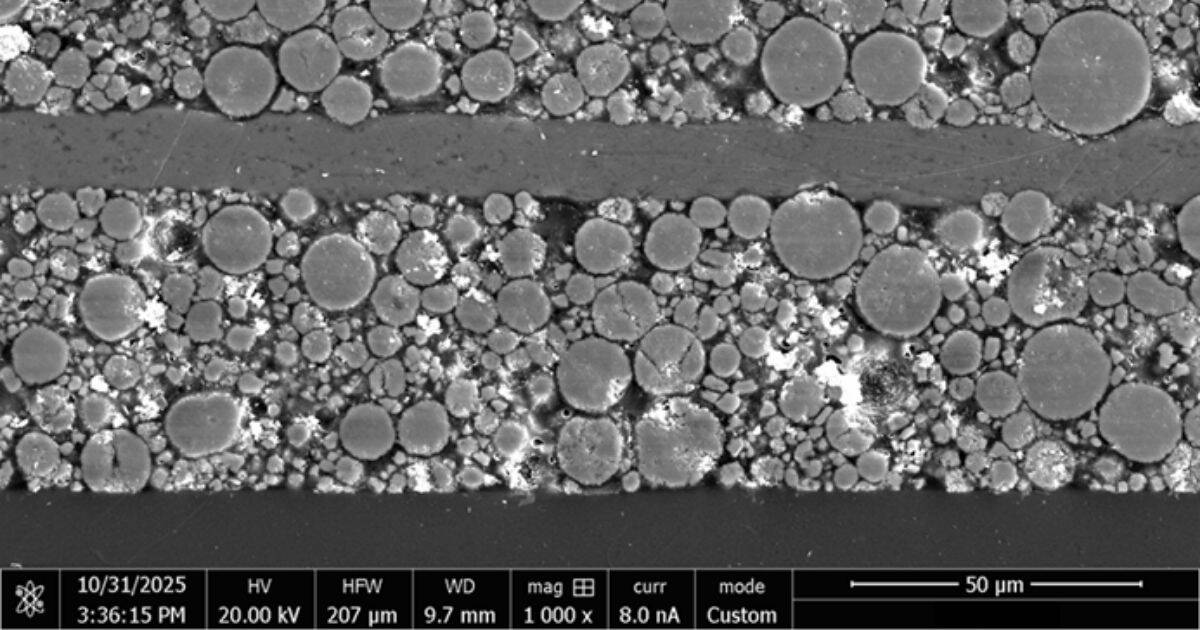
Cathode Cross-Section SEM. This level of detail is essential for evaluating improvements in energy density, mechanical robustness, and charge-transfer efficiency.
2.3. Particle-Size Engineering and Morphology Characterization
GHB Intellect can evaluate electrode formulation strategies (including engineered particle-size distributions, secondary-particle architecture, and morphological uniformity) using:
- Laser diffraction (D10, D50, D90)
- Optical microscopy
- Plasma focused ion beam-assisted particle mapping
- Crystallite size estimation via X-ray diffraction (XRD) peak broadening
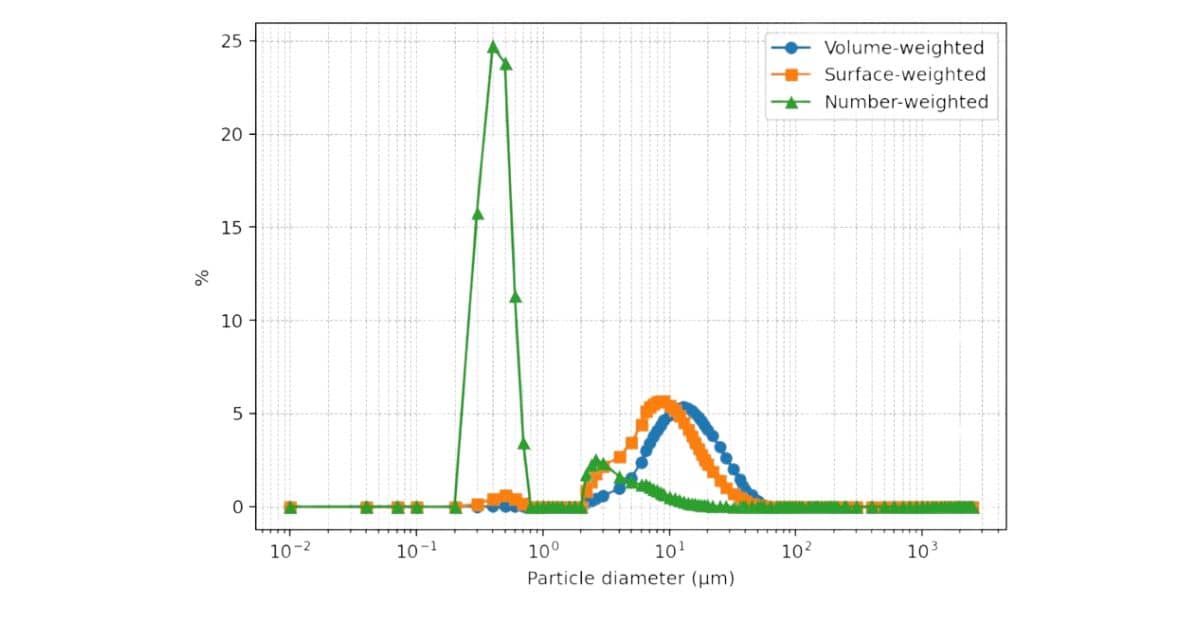
Particle Size Distribution.This helps quantify key industry innovations such as bi-modal or multi-modal particle size blending for enhanced packing density and reduced microcracking.
2.4. Advanced Crystallographic and Atomic-Scale Testing
To verify next-generation electrode designs, GHB Intellect deploys advanced crystallographic and atomic-scale probes:
- High-resolution transmission electron microscopy + fast Fourier transform to distinguish layered/spinel/rock-salt phases
- Scanning transmission electron microscopy with energy-dispersive X-ray spectroscopy and electron energy loss spectroscopy to map dopants, surface reconstructions, and oxidation gradients
- Electron backscatter diffraction for grain orientation, size, and high-angle boundary distribution
- XRD + Rietveld refinement for phase quantification and lattice parameter extraction
These methods detect subtle but critical performance-related innovations such as dopant placement, phase heterogeneity, microstrain, and reconstructed surface layers.
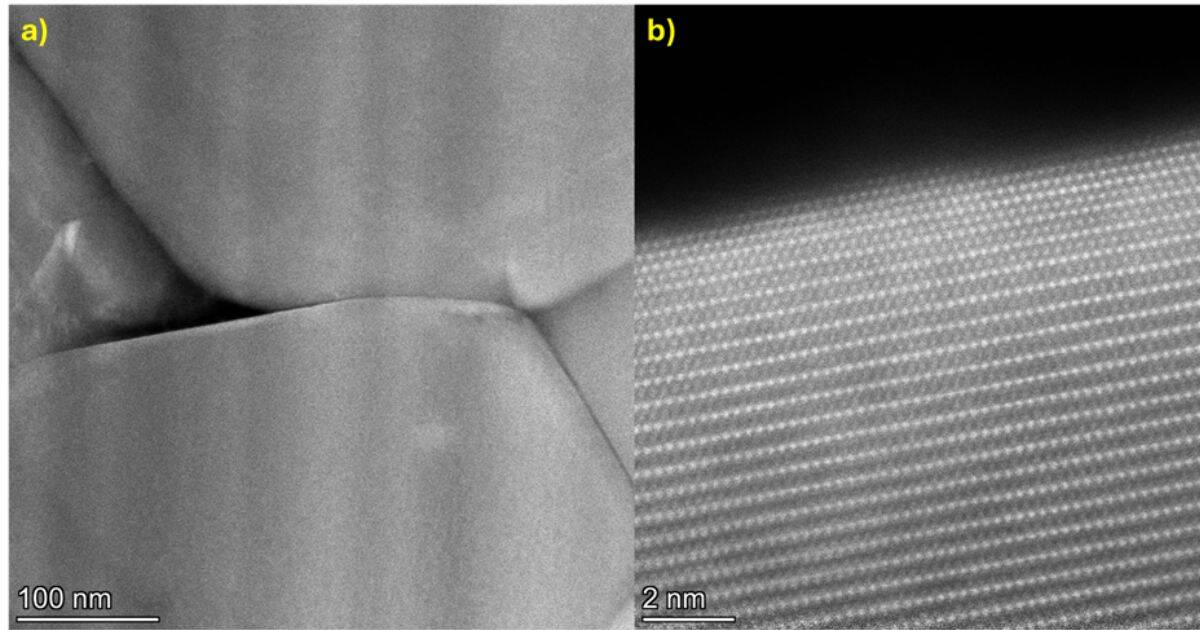
TEM images: (a) low-magnification overview; (b) high-resolution atomic-scale lattice image
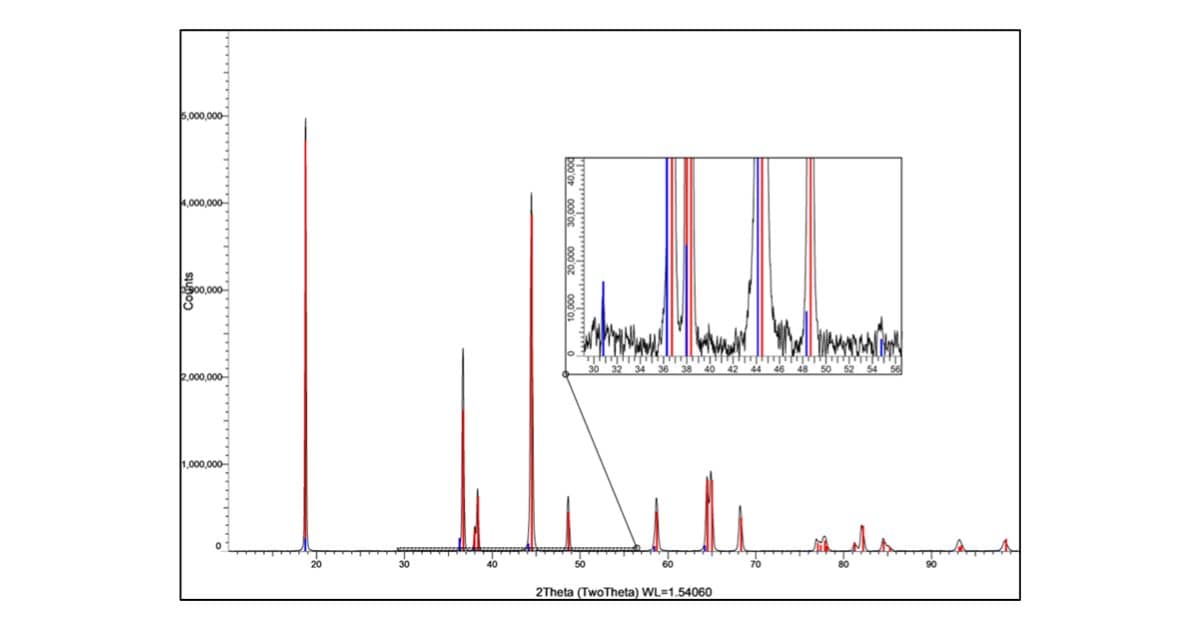
XRD with phase matching.
2.5. Separator and Binder Characterization
In order to evaluate separator enhancements such as ceramic coatings, shutdown layers, and polymer blends engineered for safety and ionic transport, GHB Intellect can conduct in-depth separator analyses, including:
- Cross-section and planar SEM imaging
- Ceramic coating thickness measurement
- Fourier-transform infrared spectroscopy (FTIR) and Raman for polymer/binder identification
- Differential scanning calorimetry and thermogravimetric analysis for thermal shrinkage and melting behavior
- Mechanical adhesion and peel-force testing
- Porosity measurements (2D SEM or 3D FIB-SEM)
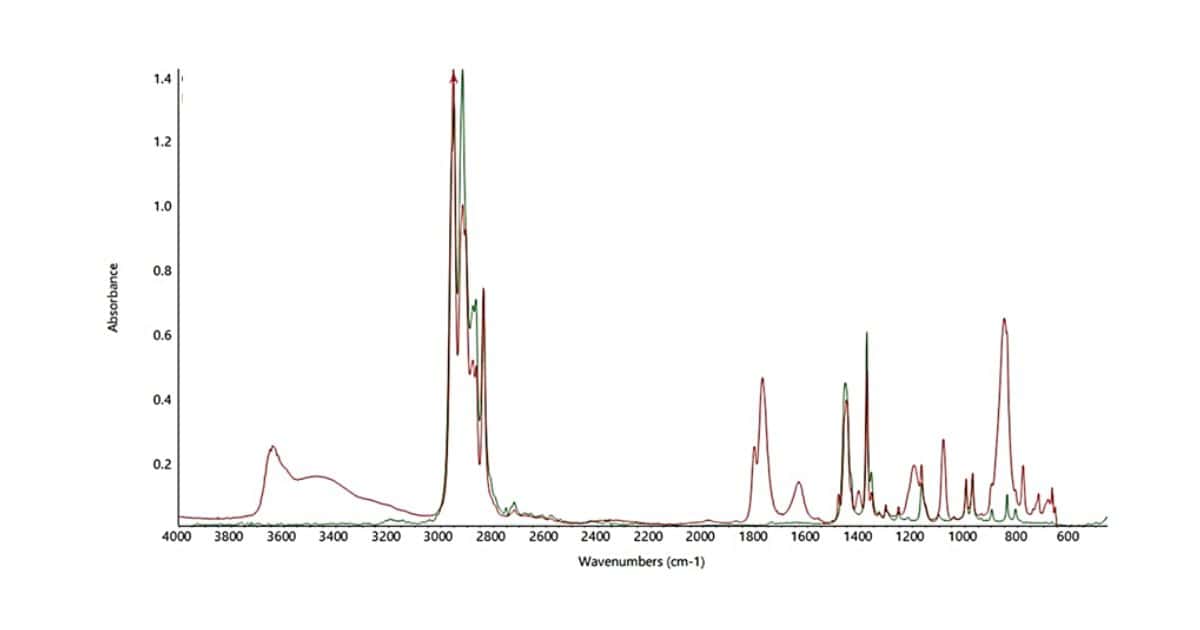
FTIR analysis of Separator.
2.6. Electrolyte Composition, Additives, and SEI/CEI Investigation
GHB Intellect can also provide a complete chemical fingerprint of the electrolyte system using:
- ¹H and ¹⁹F nuclear magnetic resonance (NMR)
- Gas chromatography-mass spectrometry (GC-MS) for solvent and additive identification
- Inductively coupled plasma optical emission spectroscopy / inductively coupled plasma mass spectrometry (ICP-OES / ICP-MS) for trace-metal analysis
- Time-of-flight secondary ion mass spectrometry depth profiling for interfacial chemistry gradients
- FTIR for molecular functional-group mapping
This allows us to determine solvent blend ratios, solid electrolyte interphase (SEI)-forming additive packages (e.g., fluoroethylene carbonate, propane sultone, vinylene carbonate), salt systems (LiFSI, LiPF₆), and their decomposition pathways, critical for evaluating fast-charging or long-cycle electrolyte innovations.
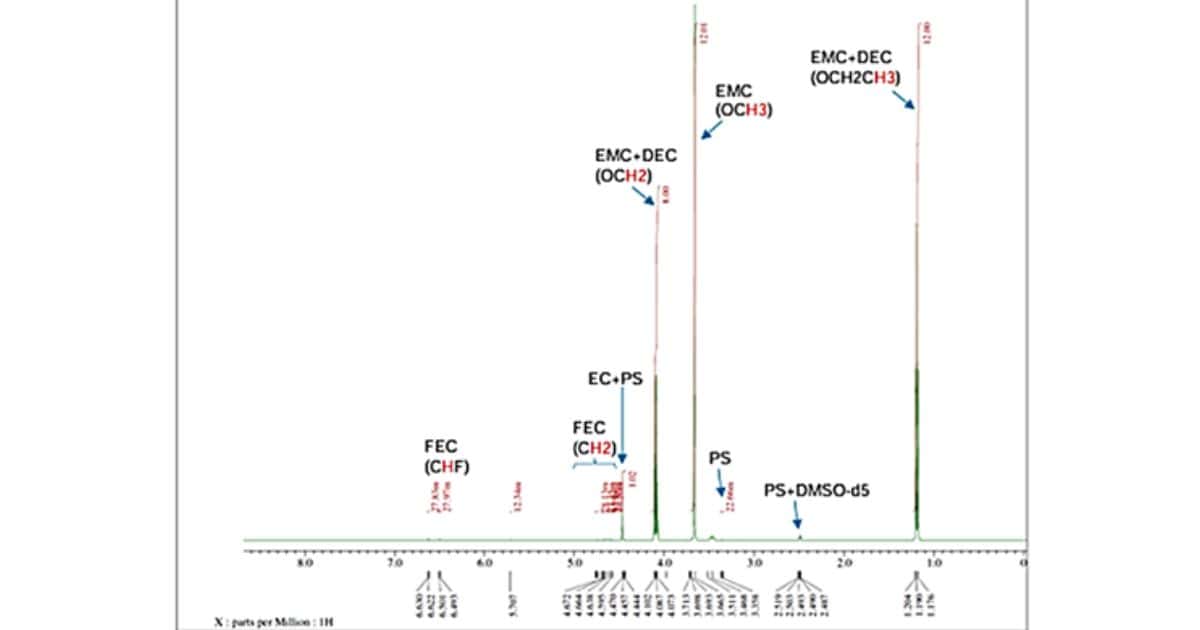
NMR Fingerprinting.
2.7. Electrochemical Performance Mapping and Correlation
In order to connect structural and chemical findings to real-world functionality, GHB Intellect performs:
- Relaxed open-circuit voltage measurements (charge and discharge directions)
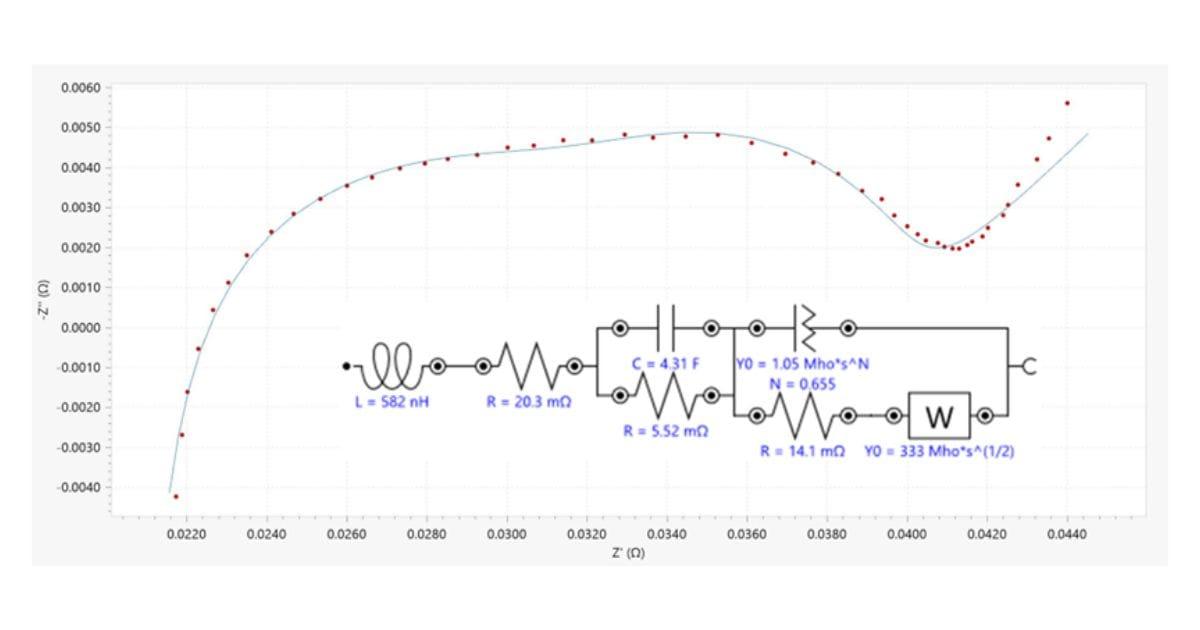
- Electrochemical impedance spectroscopy across full state of charge (SOC) range
- Direct current internal resistance profiling
- Optional cycling / degradation studies
This provides a unified view of:
- Ohmic resistance
- Charge-transfer kinetics
- Diffusion behavior
- SEI/cathode electrolyte interphase stability
- SOC-dependent impedance
These tests confirm whether material innovations meaningfully translate into improved cycling behavior, faster charging capability, and superior thermal stability.
2.8. Deliverables and Reporting
All results are compiled into a comprehensive technical report. Deliverables include:
- Annotated figures and micrographs
- Full chemical and structural datasets
- Comparative analysis across multiple samples
- Benchmarking versus competitor or reference cells
- Executive-level summary with key findings
Why choose GHB Intellect
At GHB Intellect, we do far more than test batteries. We uncover the science, engineering, and strategic implications behind every material, architecture, and chemistry choice inside the cell.
Our Battery Cell Characterization program uniquely integrates:
- Analytical methods, from SEM/transmission electron microscopy/FIB-SEM to XRD, ICP-MS, NMR, Raman, GC-MS, and full electrochemical mapping
- A multi-disciplinary team of scientists, engineers, microscopists, and electrochemists
- high-grade documentation suitable for a variety of applications: competitive analysis, supplier evaluation, research and development (R&D), evidence-of-use analysis, and litigations
- Industry-oriented reporting tailored to original equipment manufacturers, suppliers, investors, and legal teams
Whether your goal is to validate a breakthrough material, qualify a new supplier, analyze a competitor’s technology, or support high-stakes intellectual property (IP) matters, GHB Intellect delivers the depth, rigor, and clarity needed to stay ahead in a rapidly evolving battery landscape.
If you are developing next-generation lithium-ion technologies, validating supplier claims, benchmarking competitor products, or investigating potential IP infringement, we’re ready to support you. Our battery cell characterization work, run with qualified partner laboratories, provides the structural, chemical, and electrochemical insights needed to make confident engineering, business, and IP-related decisions.
Contact our team to discuss your project or request a customized proposal. Let us help you uncover the innovations that drive performance, and turn data into strategic advantage.
About GHB Intellect
GHB Intellect is a technology consulting and intellectual property services firm. We provide advanced technical analysis, engineering/reverse engineering, and expert evaluations across a wide range of industries. Our battery characterization team combines expertise in electrochemistry, materials science, microscopy, spectroscopy, and failure analysis to deliver actionable insights for product development, competitive benchmarking, mergers and acquisitions (M&A) due diligence, and IP litigation.
With qualified partner laboratories and multi-disciplinary experts, GHB Intellect turns complex technical data into clear findings you can act on.