Eighty patents, four research groups: ranking a portfolio for licensing
The technology commercialization center of a government institution needed to know which of its 80 patents were worth marketing. We built a scoring system with the client, ranked every patent quickly, then analyzed the top 20 in depth, with a one-page summary for each and advice on evaluating new filings.
Case study · Portfolio analysis · Licensing · Research institutions
The situation
- Client
- The technology development and commercialization center of a government institution
- Portfolio
- 80 patents issued over six years, from four research groups
- Fields included
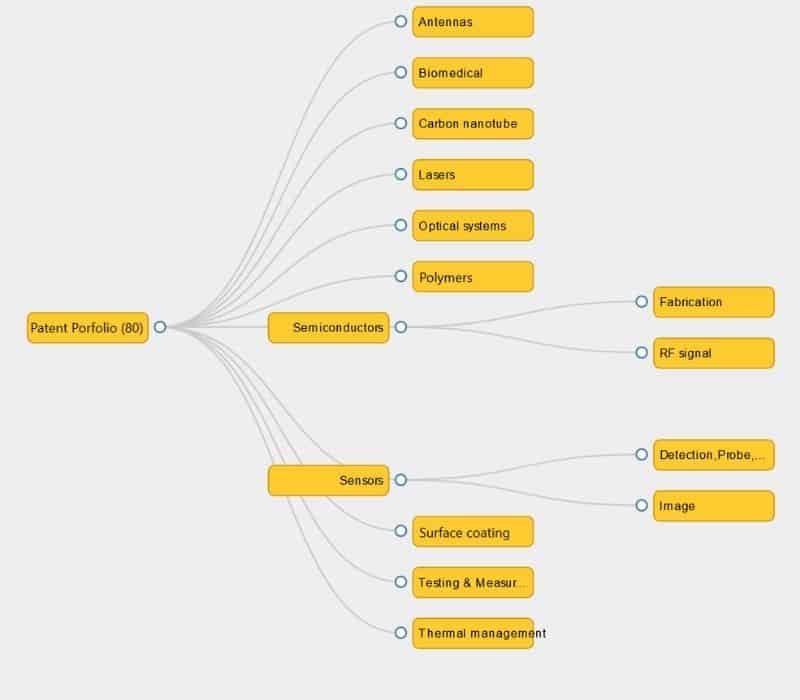
- Antennas, biomedical, polymers, lasers, optical systems, nanostructures, semiconductors, sensors, and surface coatings
Portfolio maintenance gets expensive as a portfolio grows, and this one had grown out of four separate research groups. The center wanted to know which patents to market and license, how attractive the portfolio was commercially, and how to judge new applications for marketing from now on.
The challenge
- Breadth
- At least nine technical fields in one portfolio
- Constraint
- Time and budget had to go to the patents with real potential
No single expert could judge patents on lasers, polymers, and semiconductors alike. And reviewing all 80 in depth would have spent most of the budget on patents with little market potential.
What GHB Intellect did
- Team
- 14 subject matter experts matched to the portfolio’s fields, and three intellectual property (IP) analysts
- Scoring
- A custom ranking system, built with the client
- Phase 1
- A rapid quality review of all 80 patents, each ranked from Low to High
- Phase 2
- Technical, business, and legal analysis of the top 20
We started by mapping the portfolio’s subject matter, then built the team around it. Each subject matter expert reviewed patents in their own field for technical content and where the technology could be used. The IP analysts reviewed every patent for legal and business risk.
With the client, we built a scoring system around the factors that decide whether a patent will sell or license. They included the patent landscape, prosecution history, claim scope and language, family breadth, likelihood of workarounds, ease of detection, market fit and size, and whether the invention is already in use.
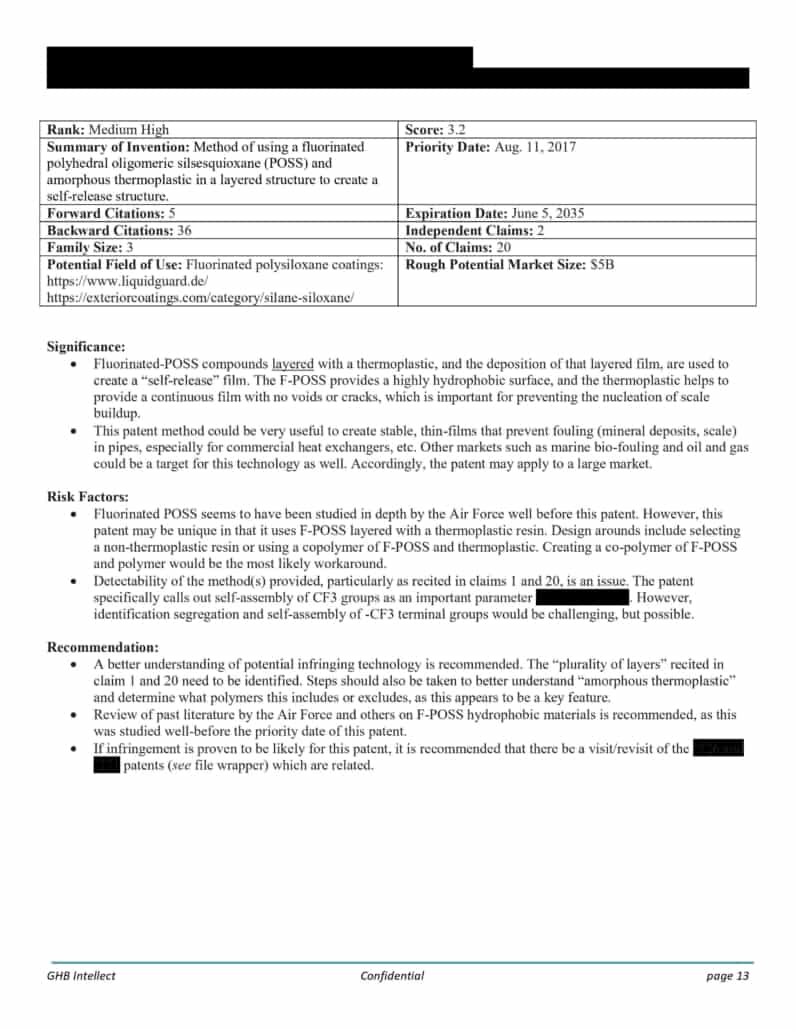
In phase 1, the experts and analysts rated all 80 patents together, so the ranks were consistent across fields, and the 20 highest-rated patents went forward. In phase 2, we analyzed each of those 20 for field of use, market size, significance, and risk, gave each a composite score, and recommended where to take it next in research and marketing.
Outcomes
- Ranking
- All 80 patents ranked by market attractiveness
- Top 20
- Field of use, market size, significance, risks, and a recommendation for each
- Deliverables
- A ranking spreadsheet, a one-page summary per patent, and an executive summary with portfolio strategy
The center came away knowing which patents to market first, why those ranked highest, and how to evaluate new applications for marketing and licensing from here on.
Figures
Related work
IP management
Know what your portfolio covers, what to keep, and what to let go.
IP monetization and brokerage
Find who practices your patents, and build the case to license or sell them.
Universities, research institutes, and government
The patents worth licensing, and the companies likely to need them.
Tell us what you need to know
A senior person replies within one business day. All inquiries are confidential.